
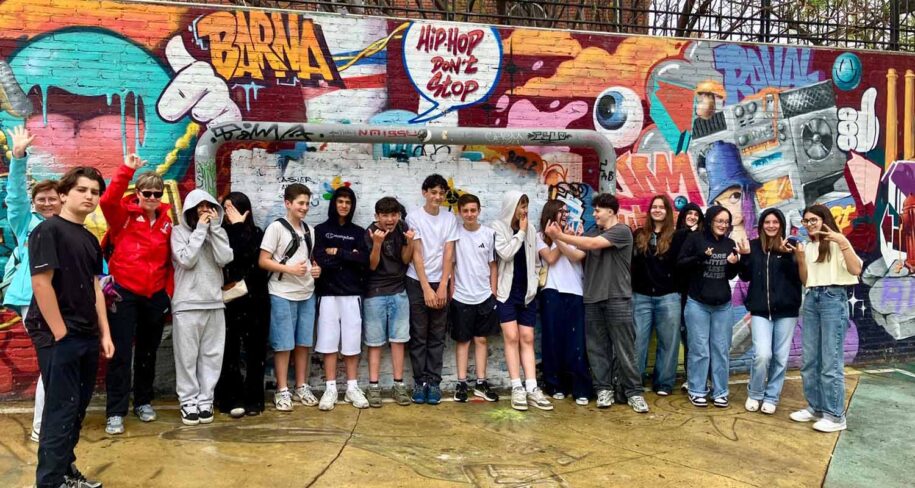
Cooltourspain’s educational group tours in Barcelona have evolved far beyond traditional walking tours. Today, programs are conceived as dynamic, interactive experiences that engage students through games, challenges, and hands-on learning within the city’s vibrant urban environment.
In this sense, Spain remains a leading destination for group travel, and in 2026, innovation continues to redefine the sector. Educational groups tours in Barcelona increasingly incorporate gamified elements that are essential for capturing students’ attention and sustaining engagement.
Moreover, urban art and contemporary culture have become key components of school trips to Spain. Our approach guarantees meaningful learning outcomes while maintaining a strong emphasis on enjoyment and participation.
The key to a successful school tour lies in adapting content to each age group. Younger students benefit from playful discovery, while teenagers demand immersive, participatory formats. Technology also plays a crucial role—augmented reality tools and digital resources help students better understand Barcelona’s layered history, architecture, and cultural identity.
Our experiences are designed not only to educate but to inspire students to explore Barcelona from fresh perspectives—moving beyond passive observation and encouraging curiosity and critical thinking.
- Barcelona’s scavenger hunt for high school students
- Preparation is the key
- Street art professionals lead the way
How does Cooltourspain differentiate from traditional educational group tours in Barcelona?
Conventional educational group tours in Barcelona can quickly lose students’ attention when reduced to passive listening. That is why incorporating interactive elements is essential. In our educational groups tours Barcelona, the city becomes an open-air classroom where students actively participate instead of simply receiving information.
Gamification is particularly effective. By integrating challenges, rewards, and team-based missions, students engage more deeply with the experience. They solve history-based riddles, locate clues at iconic landmarks, and collaborate—developing teamwork, analytical thinking, and problem-solving skills.
Variety in formats also enhances engagement. Theatrical storytelling, augmented reality, and guided narratives bring Barcelona’s past and present to life. Students can virtually interact with historical figures or visualize the transformation of neighborhoods over time.
A scavenger hunt focused on history and architecture/art
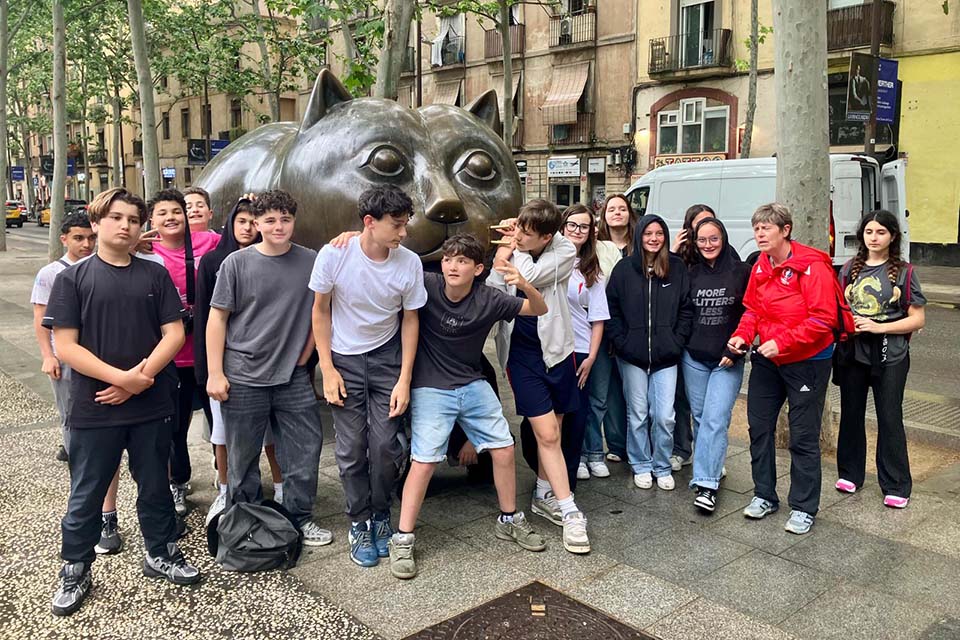
Educational scavenger hunts are among the most effective tools for introducing students to Barcelona’s heritage. Participants explore historic districts, solving puzzles tied to real events, architectural styles, and influential figures.
These activities foster collaboration, logical reasoning, and active learning. Leaving the classroom and immersing themselves in the city strengthens students’ connection to academic content.
Programs like these aim to make history tangible—sparking curiosity and encouraging full engagement through enjoyable, student-centered formats. Teachers can define objectives in advance to ensure alignment between educational goals and the experience.
Museum visits included in the educational group tours in Barcelona
Students take part in treasure hunts, role-playing scenarios, and quiz-based challenges that position them at the center of their learning journey. Museums can be challenging environments for maintaining engagement, but Cooltourspain has developed strategies to overcome this.
Themed visits are especially effective. In Barcelona, students might explore topics such as modernism, Catalan identity, or avant-garde movements. Some guided tours focus on specific artists like Picasso or Miró, while others highlight broader themes such as political expression or overlooked artistic perspectives.
The Gothic Quarter offers numerous options that can be tailored for any educational group, options as MOCO Museum, home of some of the best street art & graffiti.
This approach ensures that students are not passive observers—they actively engage with culture through immersive and memorable experiences.
Why do in-advance preparation and motivation matter?
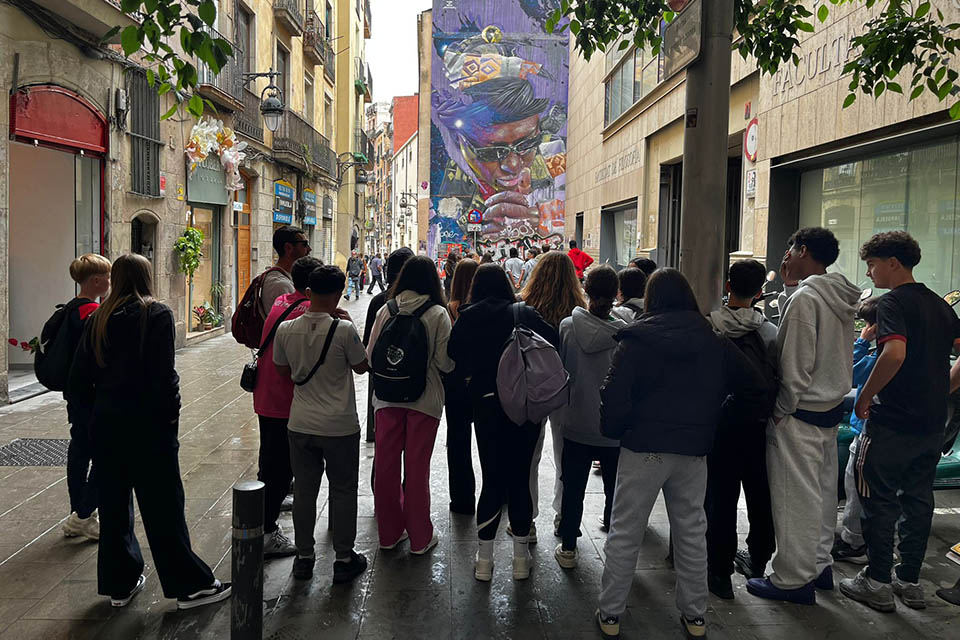
Successful educational tours begin before arrival. Introducing themes, discussing key figures, or posing thought-provoking questions in advance builds anticipation and context.
When students understand the purpose behind a visit, their motivation increases. Teachers can assign roles, encourage pre-tour research, or facilitate discussions to deepen engagement.
Equally important is post-visit reflection. Activities such as quizzes, creative projects, or written reflections help consolidate learning and connect the experience to the academic curriculum.
Why did we choose urban art and graffiti for the educational group tours in Barcelona?
Barcelona is a city in constant transformation, and urban art has evolved into a powerful educational tool. Integrating graffiti and street art into educational groups tours Barcelona allows students to interpret the city through a contemporary and socially relevant lens.
The impact is immediate. As students explore neighborhoods known for their artistic expression, they do more than observe murals—they analyze them, interpret their meaning, and uncover the social narratives embedded within them.
Urban art also promotes creativity and self-expression. Our tours often include practical workshops where students experiment with stenciling, spray techniques, or lettering—transitioning from observers to creators.
Differentiating our educational group tours in Barcelona
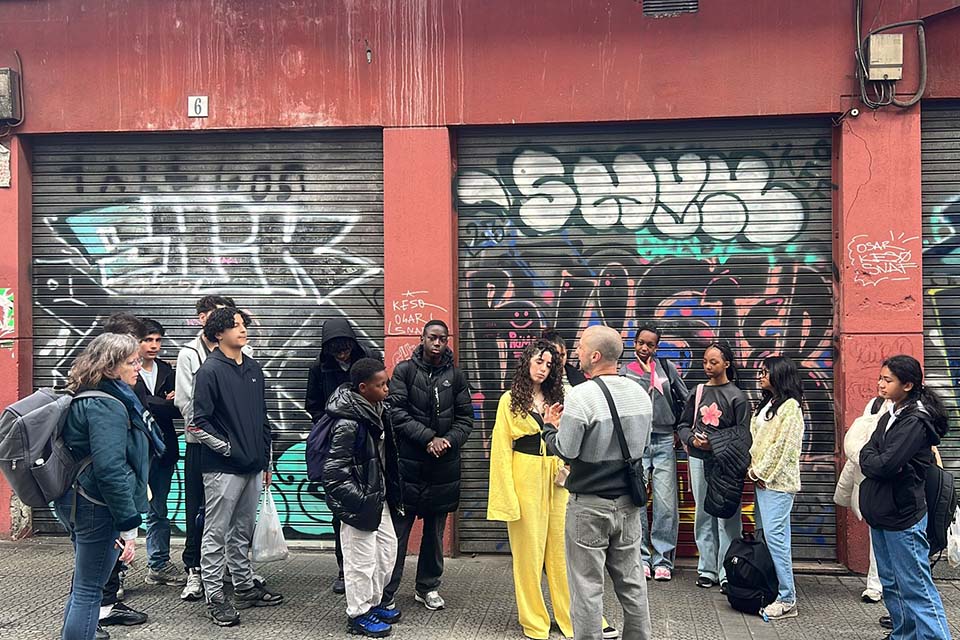
Street art offers a compelling alternative to traditional sightseeing. These experiences enable students to view the city through sociocultural perspectives and connect with modern artistic expression.
Instead of simply observing monuments, students interpret visual narratives, engage in discussion, and relate their insights to broader themes such as identity, politics, and social change. The streets effectively become a living classroom.
This perspective helps students understand that culture is dynamic. Art is not confined to museums—it also exists in public spaces, reflecting the voice and identity of communities.
Transforming and improving the walking tours industry
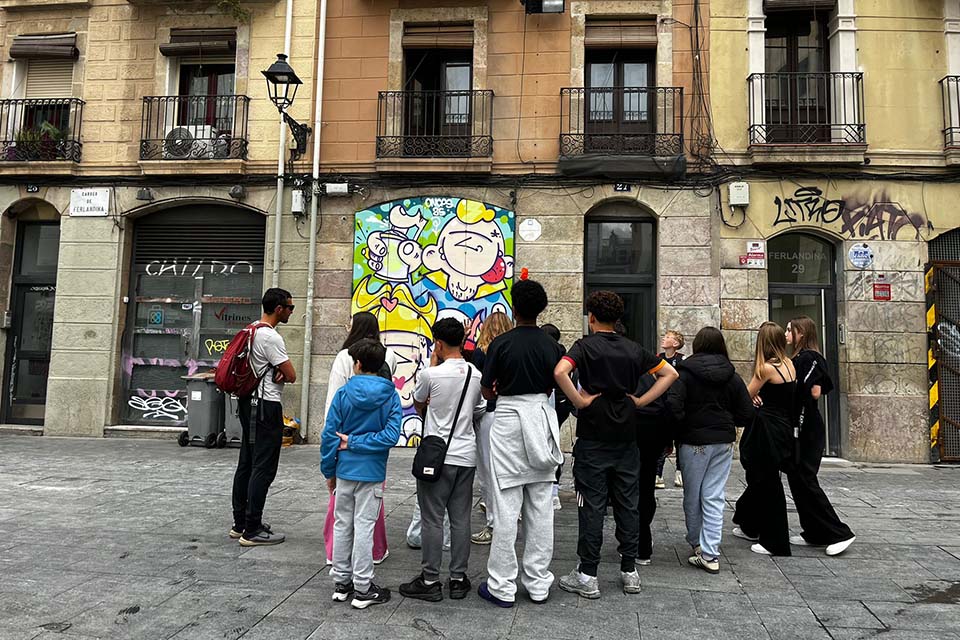
Specialized in graffiti walking tours have carved out a strong niche within educational tourism. Professional guides and urban artists collaborate to enrich each experience, combining artistic insight with historical context.
At Cooltourspain, our team blends expertise in art education and guided tours. Our guides are trained in history or art history, while our artists bring both technical skill and the ability to engage and inspire students.
Together, they create a multidisciplinary and adaptable tour model that meets diverse educational objectives.
Non-formal education for the acquisition of curricular skills
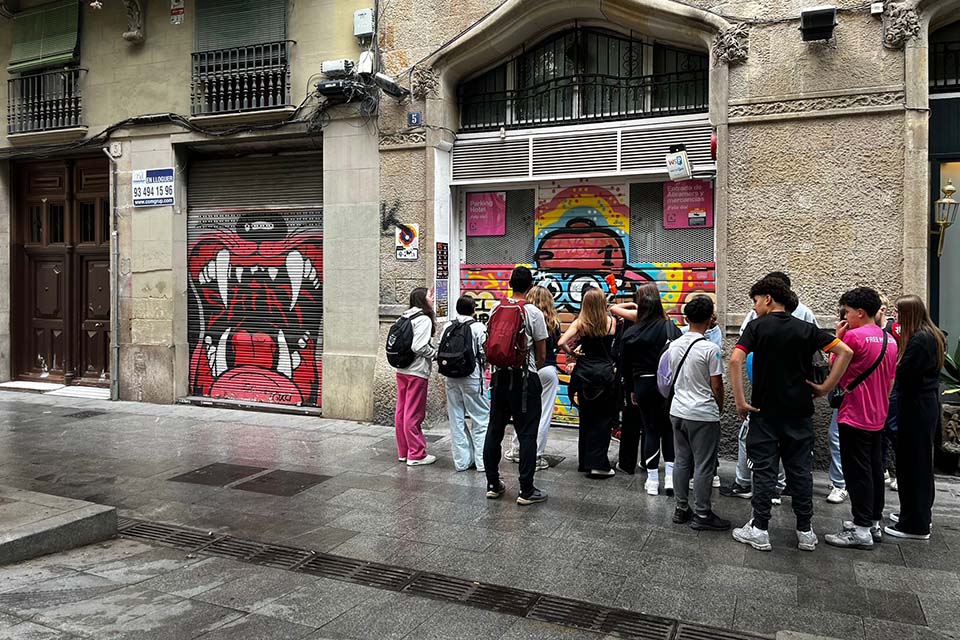
Learning through urban art encourages innovation, critical thinking, and creative problem-solving—essential competencies for modern students. Graffiti becomes a medium through which learners explore social issues and challenge established perspectives.
These tours and tailor-made trips extend beyond visual arts. Students can analyze literary elements in street messages, study historical movements reflected in murals, or examine spatial and social dynamics through geography.
Additionally, they develop practical skills such as observation and interpretation. They learn to decode messages, question assumptions, and form independent viewpoints. Urban art thus becomes both a learning tool and a catalyst for creative thinking.
Cooltourspain’s approach to sightseeing tours in Barcelona
For over eight years, Cooltourspain has been redefining educational groups tours in Barcelona and other cities around Spain. Our mission has been to design engaging, student centered experiences that combine education with enjoyment.
We believe the most effective tours are those that prioritize participation over passive observation. Our methodology focuses on creativity, interactivity, and high-quality content tailored to today’s learners.
As the educational tourism sector continues to evolve, we are confident that immersive, hands-on experiences like ours represent the future of school travel.
Leave a Reply